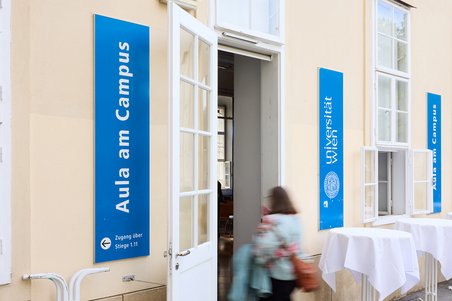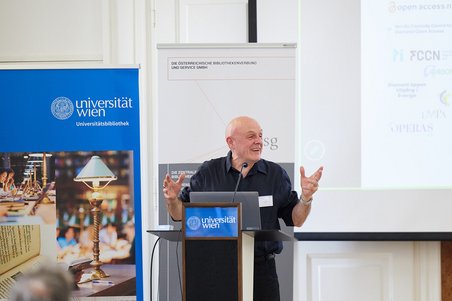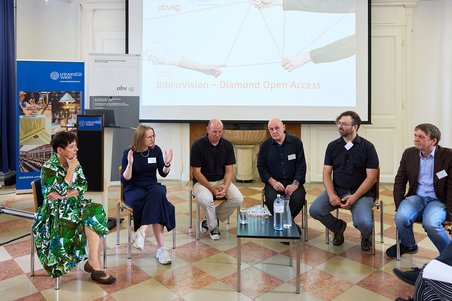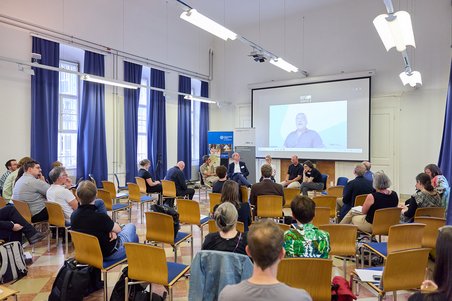

On 9 June 2026, the first BiblioVision event of the year took place in Vienna. The international conference "International Diamond Open Access Initiatives" was jointly organised by OBVSG and Vienna University Library and focused on current developments, challenges and future perspectives in the field of Diamond Open Access.
The BiblioVision event series aims to foster professional exchange, provide new impulses and create opportunities for discussion and networking within the library and information community.
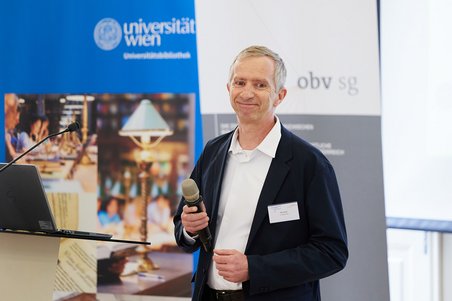
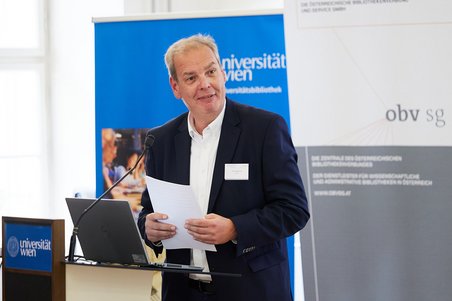
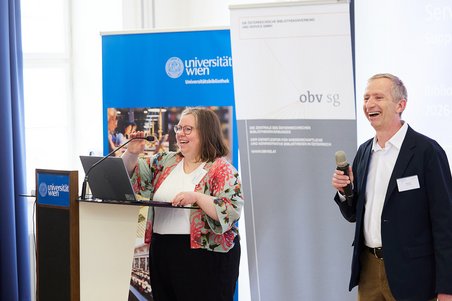
The event was opened by Andreas Brandtner and Günther Simonitsch.
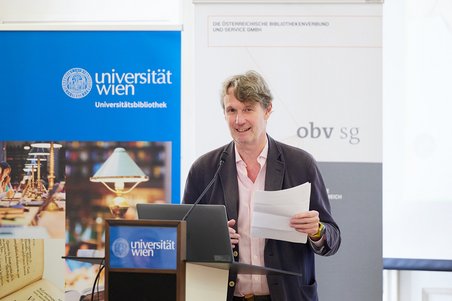
During the morning session, international experts presented current developments and best-practice examples from Germany, Switzerland, Sweden and the European level:
The presentations provided insights into national and international initiatives, capacity centres and support structures for Diamond Open Access and highlighted different approaches to fostering sustainable scholarly publishing services.
Around 40 participants attended the event on site, while approximately 100 additional participants joined online.
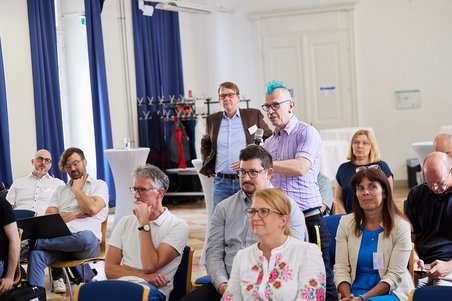
Following the lunch break, the focus shifted to discussion and exchange. Two Fishbowl discussions explored perspectives, challenges and possible future scenarios for Diamond Open Access in Austria.
Between the two discussion rounds, Magdalena Andrae (Federal Ministry for Women, Science and Research) presented the results of a needs assessment on central Diamond Open Access publishing services conducted within the framework of ERA-NAP 2026–2028.
The discussion painted a nuanced picture of Diamond Open Access (DOA). Several participants emphasised that DOA is both an ideal and, at present, still a niche model. At the same time, it was pointed out that many successful developments had initially emerged in niche areas and could become more widely established as professionalisation increased and infrastructure improved.
A key issue was the low visibility and appeal of DOA to researchers. It was discussed that many academics focus primarily on the reputation of publication venues and often make only a limited distinction between different open-access models. At the same time, contributing to Diamond Open Access journals frequently involves a considerable amount of additional, mostly voluntary, effort. Studies show that a large proportion of editorial work is carried out on a voluntary basis. To increase acceptance, processes would therefore need to be organised as simply and professionally as possible.
The link between Diamond Open Access and research assessment was also discussed. Several participants saw this as a key driver for the future development of the model. Whilst some suggested institutional requirements or quotas as a possible incentive, others viewed this critically. There was, however, consensus that Diamond Open Access should be perceived as a publication option of equal quality, rather than as an inferior alternative to established publishing options.
Furthermore, the competitiveness of DOA vis-à-vis commercial publishers was discussed. It was emphasised that high academic quality is not automatically tied to large publishing houses and that professional societies could play an important role in strengthening reputation and visibility. At the same time, it was highlighted that the publishing landscape is diverse and that different models should coexist.
Further points of discussion concerned the digital sovereignty of research institutions, the efficient use of public funds, and the question of who should manage and make scientific knowledge accessible in the long term. DOA was described as a transparent and community-oriented complement to existing models. It was emphasised on several occasions that this was not a matter of commercial and non-commercial offerings competing with one another, but rather of providing additional sustainable publication options.
Strong academic communities, high publication standards, professional services and appropriate incentive structures for researchers were cited as key factors for success.
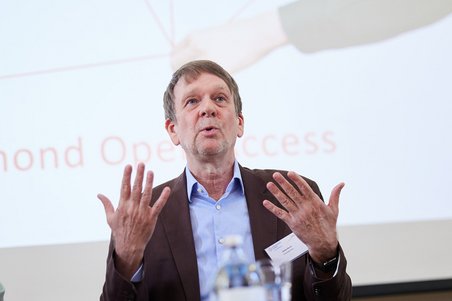
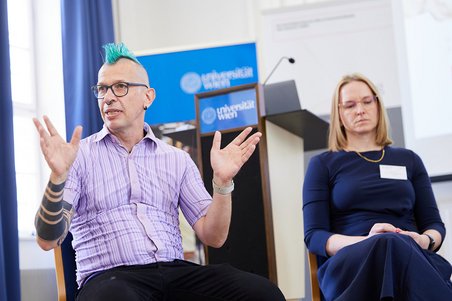
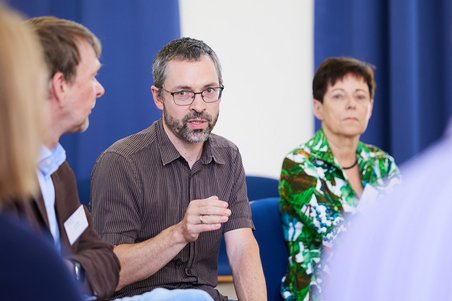
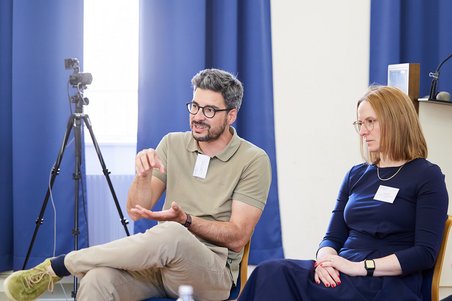
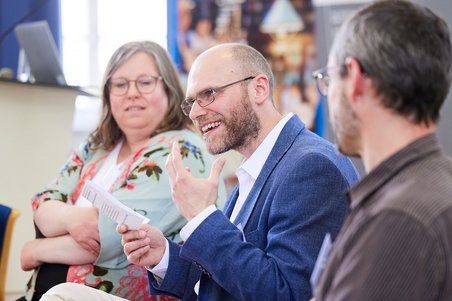
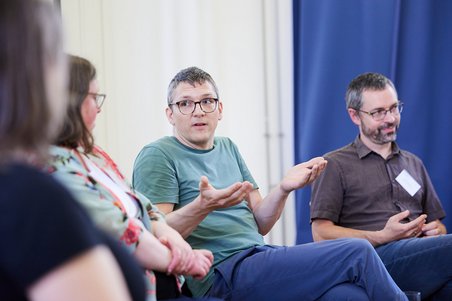
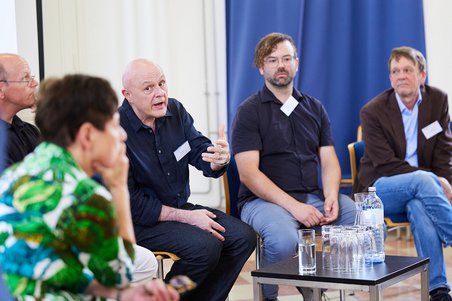
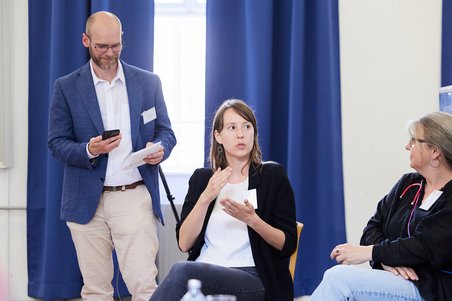
During the second round of discussions, the possible structure of a central Diamond Open Access publication hub for Austria was discussed. It became clear that the planning should not be based on a single model, but that different models and stages of development must be taken into account. Several participants also emphasised that the development of such a structure should take place in stages and be evaluated regularly.
A key point of discussion was the added value of a national solution compared to existing local infrastructures. Institutions with their own publication services pointed out that a centralised service would need to offer clear added value. At the same time, it was emphasised that existing infrastructures and expertise should not be replaced, but rather integrated in a meaningful way and continued to be utilised.
It was emphasised on several occasions that a central publication hub should not be reduced to a mere technical hosting solution. A shared publishing brand, shared hosting and a national centre of expertise and services were cited as possible building blocks. The possibility of a (temporary) pilot project was also discussed, with a view to testing different models and identifying specific requirements.
Another key focus was the issue of visibility and positioning. Several participants expressed doubts that individual Austrian institutions could achieve sufficient visibility in the international arena. A joint brand and a centralised web presence were therefore cited as possible tools for raising the profile of Austrian DOA activities. At the same time, it was emphasised that institutional branding plays an important role for some institutions. However, the discussion showed that centralisation does not necessarily entail a loss of institutional identity.
The issue of resources and sustainability featured prominently. In particular, the staffing costs involved in running journals and publishing houses were described as a major challenge. Several speakers argued in favour of pooling existing resources and expertise more effectively, and of highlighting and sharing existing specialist expertise within a national framework.
Furthermore, the importance of involving the academic community at an early stage was emphasised. In the view of some participants, experience from existing initiatives showed that researchers and specialist communities should be actively involved from the outset. In particular, it was suggested that high-profile female academics should be involved at an early stage, as they can act as visible advocates to make DOA more attractive.
There was agreement that national activities should be closely linked to European developments. The possibility of embedding an Austrian National Capacity Centre (NCC) within existing European structures was discussed, with a view to benefiting from international experience, standards and networks. The evaluation of the ongoing interviews, the identification of existing expertise in Austria, and agreement on common quality standards were cited as important next steps.
Overall, the discussion revealed a fundamentally positive attitude towards stronger national coordination in the field of DOA. At the same time, it became clear that a future model should be based on cooperation, voluntary participation, clear added value for the participating institutions, and close links to the academic community and European initiatives.
“The question should not so much be what individual institutions stand to lose through greater centralisation, but rather what additional benefits, visibility and synergies can be gained as a result.”
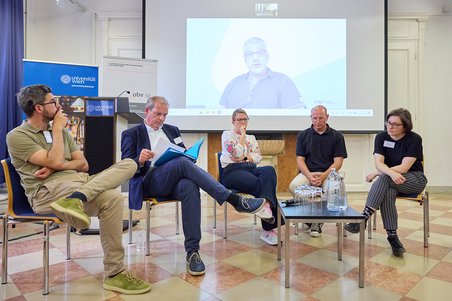
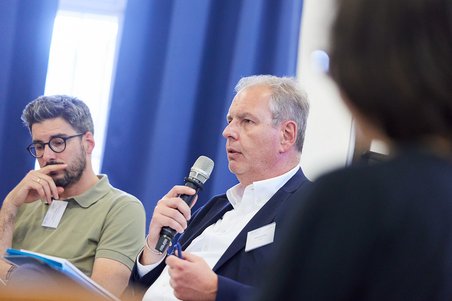
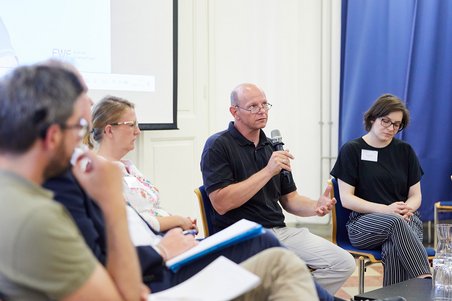
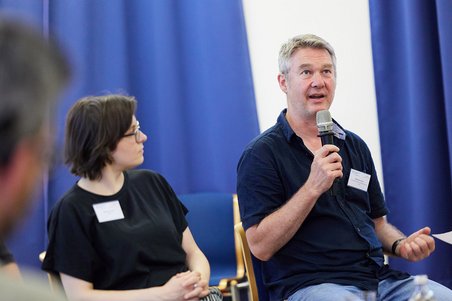
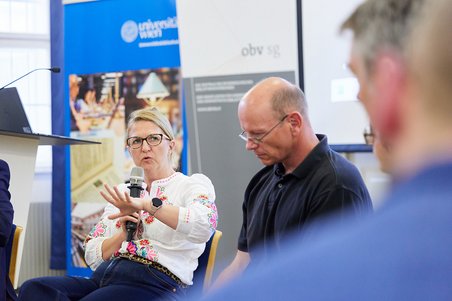
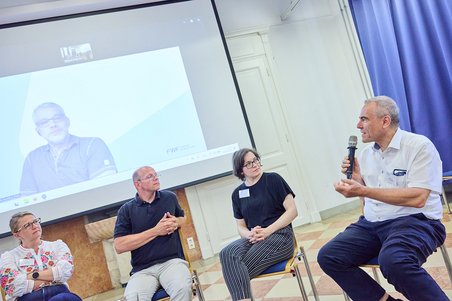
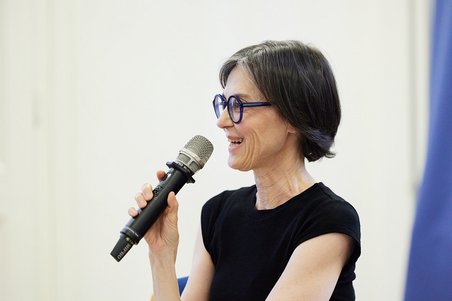
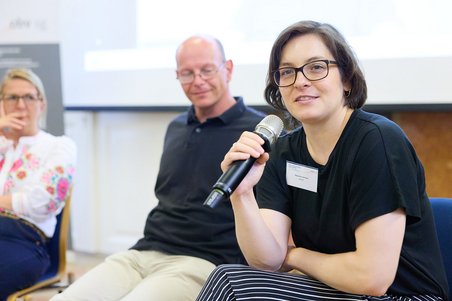
The overall atmosphere of the event was highly positive and reflected a strong interest in closer collaboration and joint solutions for the sustainable development of Diamond Open Access in Austria. In particular, the concept of a central publishing service and the model of a National Capacity Centre (NCC) received broad support from participants.
* Unfortunately, due to technical difficulties on site, there is no recording of the talk. You can find the relevant content in the presentation slides.
A selection of photos from the event can be found in the gallery below.